16 Jul,2026
Plantar Fasciitis: Understanding the Condition and the Role of Physiotherapy
Heel pain is one of the most common foot complaints seen in physiotherapy clinics, and plantar fasciitis is often the primary cause. Whether you’re an athlete, someone who spends long hours on your feet, or simply enjoy walking, plantar fasciitis can significantly affect your daily life. Fortunately, with the right physiotherapy approach, most people recover successfully without surgery.
What is Plantar Fasciitis?
The plantar fascia is a thick band of connective tissue that runs from the heel bone (calcaneus) to the base of the toes. It supports the arch of the foot and acts as a shock absorber during walking, running, and standing.
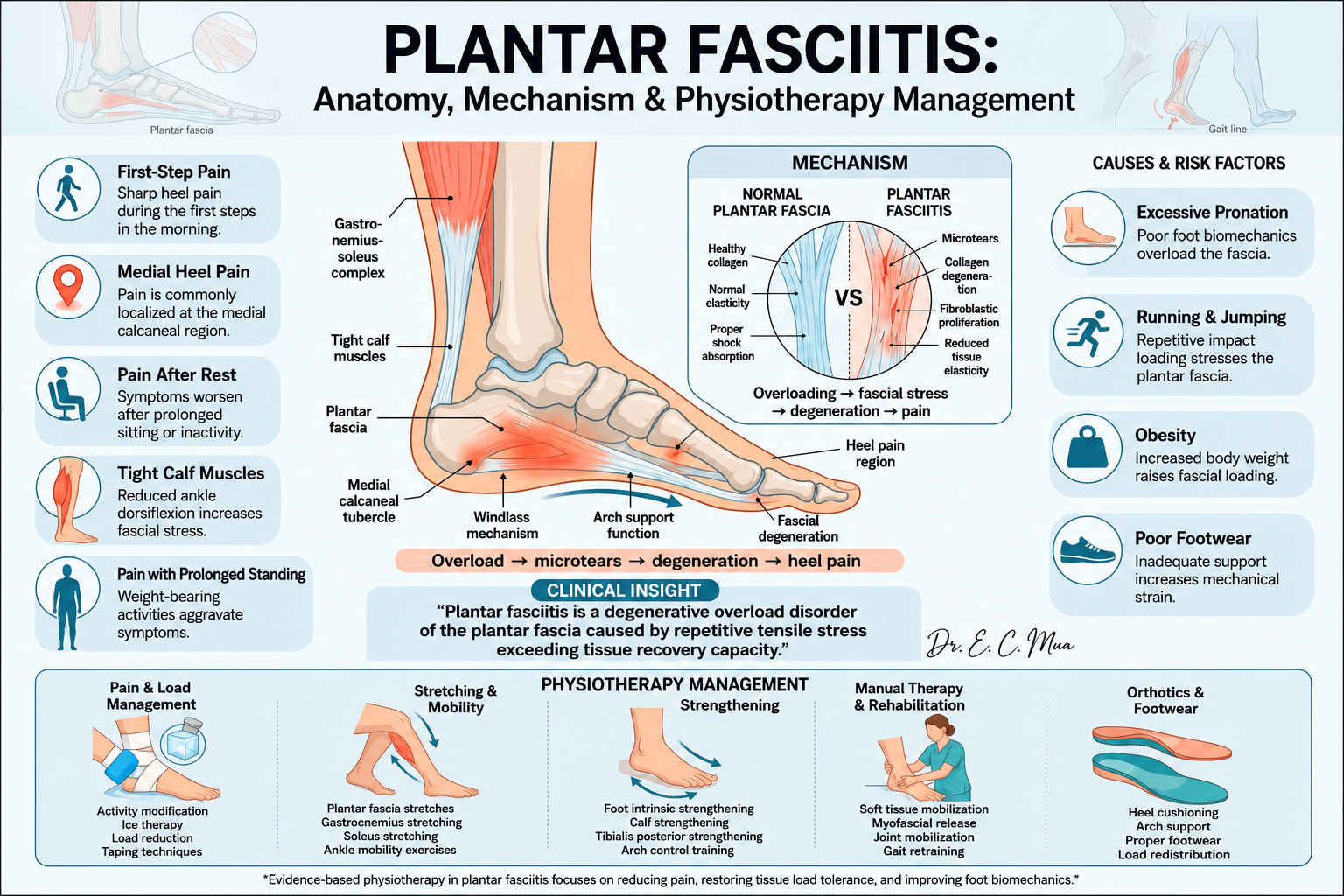
Although traditionally called plantar fasciitis, current research suggests that it is often a degenerative overload condition rather than a purely inflammatory one. Repeated stress causes tiny microtears within the fascia, leading to collagen degeneration, reduced tissue elasticity, pain, and impaired function.
In simple terms:
Excessive load → Microtears → Tissue degeneration → Heel pain
Common Symptoms
People with plantar fasciitis typically experience:
- Sharp pain with the first few steps in the morning
- Pain located on the inside (medial aspect) of the heel
- Increased pain after prolonged sitting or rest
- Heel pain that worsens after prolonged standing or walking
- Tight calf muscles and reduced ankle flexibility
- Discomfort during weight-bearing activities
Sciatica is usually linked to:
- Herniated discs
- Spinal stenosis
- Nerve compression
- Degenerative disc disease
Many people notice that the pain improves slightly after walking for a few minutes but returns later in the day after prolonged activity.
Why Does It Occur?
Several factors increase stress on the plantar fascia, including:
1. Excessive Foot Pronation
Poor foot biomechanics can place excessive strain on the plantar fascia.
2. Running and Jumping Activities
Repetitive impact loading increases tensile stress on the tissue, especially with sudden increases in training volume.
3. Obesity
Additional body weight increases the mechanical load placed on the plantar fascia with every step.
4. Poor Footwear
Shoes lacking adequate cushioning or arch support can increase stress on the heel and arch.
5. Tight Calf Muscles
Restricted calf flexibility limits ankle movement, forcing the plantar fascia to absorb greater forces during walking.
Understanding the Mechanism
A healthy plantar fascia has:
- Strong collagen fibres
- Good elasticity
- Effective shock absorption
- Normal tissue healing
With repetitive overload, the fascia develops:
- Microtears
- Collagen degeneration
- Reduced elasticity
- Fibroblast proliferation
- Increased mechanical stress
- Persistent heel pain
This explains why simply resting often doesn’t solve the problem. The tissue needs gradual rehabilitation to restore its ability to tolerate load.
The Role of Physiotherapy
Physiotherapy is considered one of the most effective conservative treatments for plantar fasciitis. Treatment focuses on reducing pain while restoring tissue capacity and improving foot biomechanics.
1. Pain and Load Management
Initially, reducing irritation of the plantar fascia is important.
Management may include:
- Activity modification
- Temporary reduction in running or prolonged standing
- Ice therapy for symptom relief
- Taping techniques
- Education on load management
2. Stretching and Mobility
Improving flexibility reduces stress on the plantar fascia.
Common stretches include:
- Plantar fascia stretch
- Gastrocnemius stretch
- Soleus stretch
- Ankle mobility exercises
Regular stretching helps improve ankle dorsiflexion and decreases tension through the plantar fascia.
3. Strengthening Exercises
Strengthening helps the foot become more resilient to daily loads.
Important exercises include:
- Foot intrinsic muscle strengthening
- Calf strengthening
- Tibialis posterior strengthening
- Arch control exercises
- Progressive loading programs
Strong foot muscles improve arch support and reduce excessive strain on the fascia.
4. Manual Therapy
Hands-on physiotherapy techniques may include:
- Soft tissue mobilisation
- Myofascial release
- Joint mobilisation
- Gait retraining
These interventions can improve mobility, reduce pain, and restore normal movement patterns.
5. Orthotics and Footwear
Appropriate footwear plays a vital role in recovery.
Recommendations may include:
- Supportive walking shoes
- Heel cushioning
- Arch-supporting orthotics
- Temporary insoles to redistribute pressure
Orthotics should complement an exercise program rather than replace it.
How Long Does Recovery Take?
Recovery varies depending on symptom duration and adherence to treatment.
- Mild cases: 6–8 weeks
- Moderate cases: 3–6 months
- Long-standing cases: 6–12 months
Consistency with exercises and gradual return to activity are key factors in successful recovery.
Tips to Prevent Plantar Fasciitis
To reduce your risk of developing plantar fasciitis:
- Stretch your calves regularly.
- Strengthen your foot and calf muscles.
- Wear supportive footwear.
- Avoid sudden increases in running or walking distance.
- Maintain a healthy body weight.
- Replace worn-out shoes regularly.
- Address abnormal foot biomechanics early.
Key Takeaway
Plantar fasciitis is not simply an inflammatory condition—it is primarily a degenerative overload disorder caused by repetitive tensile stress exceeding the tissue’s ability to recover. Effective treatment focuses on reducing pain, restoring load tolerance, improving flexibility, strengthening the foot and calf muscles, and correcting biomechanics.
With a structured physiotherapy program and patient commitment, most individuals can return to pain-free walking, exercise, and everyday activities without the need for invasive treatments.
Remember: Heel pain should not be ignored. Early assessment and evidence-based physiotherapy can significantly shorten recovery time and help prevent long-term symptoms.